What Are Digital Hackathons and How Do They Help in Technical Hiring?
 ··4 min read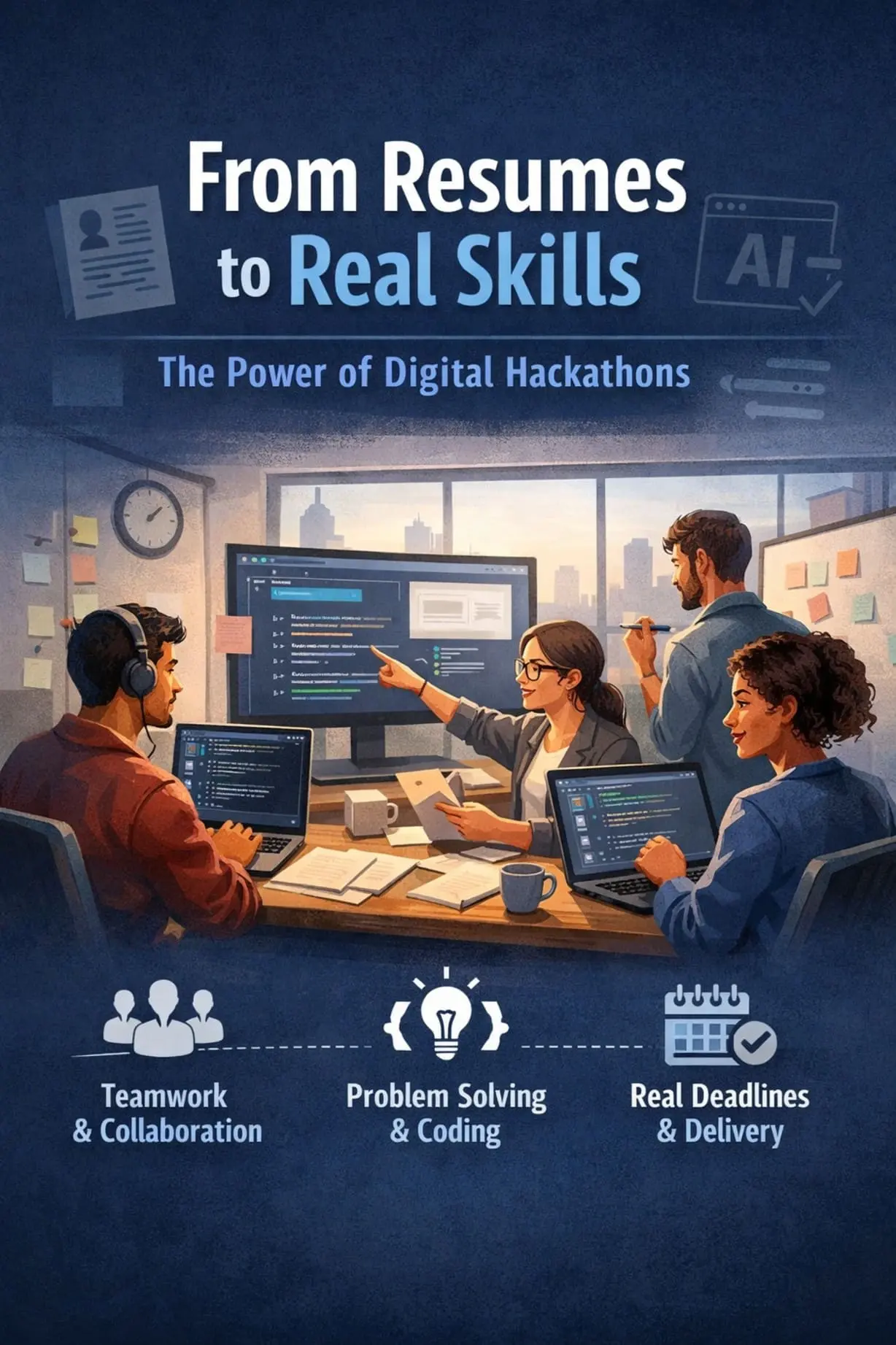
Digital hackathons are structured online challenges where candidates solve realistic software problems to demonstrate job readiness. They improve technical hiring by providing horizontal signals on code quality, problem-solving, and collaboration, allowing companies to transition from theoretical assessments to performance-based, skills-first recruitment models.
TL;DR: Digital hackathons are structured, time-bound online challenges that evaluate candidates through real-world project work instead of resumes or MCQs. They reveal problem-solving ability, code quality, collaboration, and adaptability-giving hiring teams the confidence to make faster, more accurate decisions.
What Is a Digital Hackathon in Technical Hiring?
A digital hackathon is a structured online assessment where candidates solve realistic software problems within a fixed timeframe, simulating the work they would perform on the job. Unlike competitive hackathons focused on speed or novelty, hiring-focused digital hackathons are designed specifically to evaluate practical job readiness across multiple dimensions.
During a typical digital hackathon, candidates:
- Receive Jira-style tickets with real requirements
- Submit code through Git-based workflows
- Collaborate with team members on shared tasks
- Go through AI-driven and manual code reviews
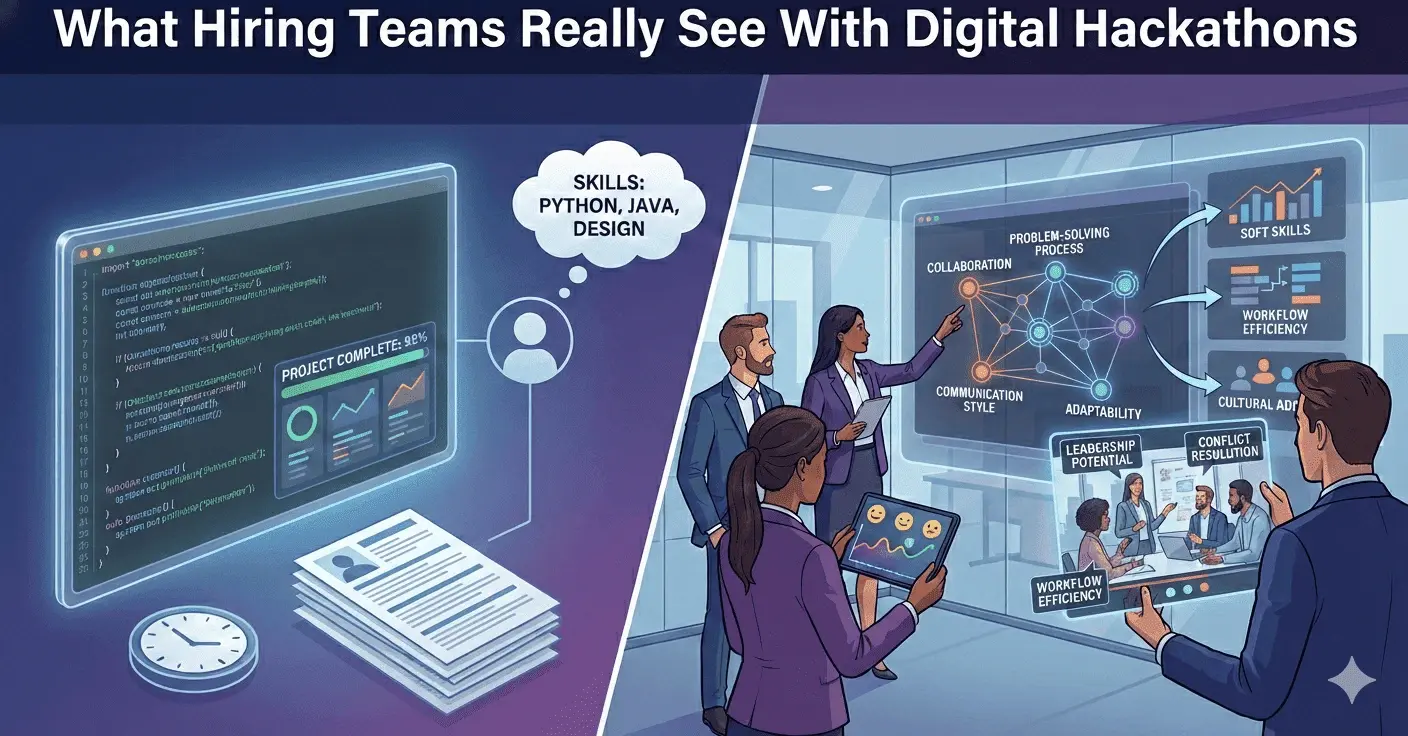
Every candidate is evaluated on how they actually work, not just what they claim on a resume. Hiring decisions become evidence-based rather than speculative.
Why Digital Hackathons Matter for Technical Hiring
Traditional hiring methods such as resume screening, MCQs, and short coding interviews fail to answer one critical question: can this candidate actually perform in a real project environment?
Digital hackathons solve this by focusing evaluation on practical execution. Companies that use this method consistently report:
- Fewer mis-hires: candidates are evaluated on real output, not polished presentations
- Faster ramp-up times: hires who proved themselves in project conditions onboard more quickly
- Fairer opportunities: self-taught developers, bootcamp graduates, and career switchers get a level playing field
- Stronger alignment: tasks mirror actual job requirements, so hiring decisions match real business needs
Organizations using experiential assessment methods tend to identify job-ready candidates faster. Those that rely solely on traditional interview pipelines often miss strong prospects.
How Digital Hackathons Work
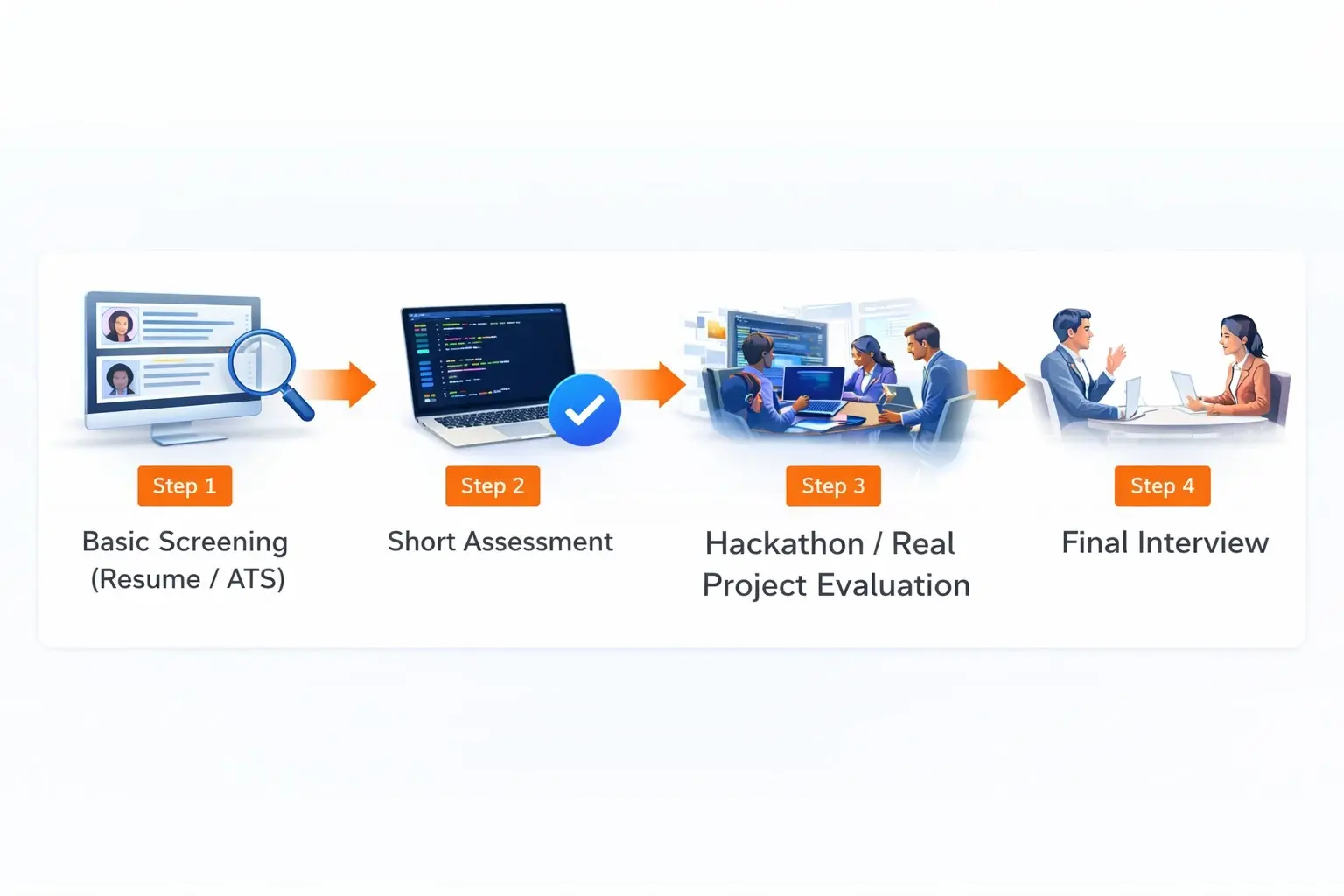
Step 1: Challenge Design
Companies define project-based tasks that reflect real responsibilities of the role. These are not abstract algorithm puzzles-they are structured around building features, fixing bugs, or architecting solutions relevant to the team's actual work.
Step 2: Candidate Participation
Candidates work on the challenge over a defined period (typically 2-5 days). They use real development tools-Git, pull requests, task boards-just as they would in a professional environment.
Step 3: Multi-Dimensional Evaluation
Instead of judging only final submissions, the evaluation examines the entire development process:
| Evaluation Dimension | What It Measures |
|---|---|
| Code Intelligence | Code quality, logical consistency, improvement patterns |
| Project Execution | Task completion, consistency, active participation |
| Technical Competency | Foundational knowledge, practical application |
| Professional Behavior | Communication, teamwork, response to feedback |
Step 4: Data-Driven Shortlisting
Hiring teams receive ranked candidate lists with performance insights, enabling faster and more confident decisions. Only the top-performing candidates proceed to final interviews.
Traditional Hiring vs Digital Hackathon Hiring
| Factor | Traditional Hiring | Digital Hackathon Hiring |
|---|---|---|
| Evaluation basis | Resume, MCQs, interviews | Real project work |
| Skill signal | Theoretical | Practical and observable |
| Collaboration assessment | Not assessed | Directly observed |
| Time to evaluate | Multiple rounds over weeks | Single challenge, parallel evaluation |
| Candidate experience | Exam-like, high pressure | Engaging, closer to real work |
| Filtering mechanism | Manual screening | Automatic self-selection |
| Hiring confidence | Based on assumptions | Based on measurable data |
Common Mistakes When Adopting Digital Hackathons
- Designing unrealistic challenges. Tasks should reflect actual job work, not competitive programming puzzles. Overly abstract challenges fail to predict on-the-job performance.
- Evaluating only the final output: The real value lies in observing the development process - commit patterns, PR quality, iteration behavior, and collaboration. Judging only the end result misses critical signals.
- Skipping the team-based element: Individual challenges miss collaboration and communication skills. Team-based hackathons reveal how candidates work with others under real constraints.
- Ignoring candidate experience hurts employer brand. Clear instructions, fair timelines, and constructive feedback are essential.
FAQ
What is a digital hackathon in technical hiring? It is a structured online challenge where candidates solve realistic software problems relevant to the role. Hiring teams evaluate them on code quality, collaboration, and how they approach real development workflows.
How long does a typical hiring hackathon last? Most run between 2 and 5 days. That gives candidates enough time to show their working style, how they solve problems, and how they iterate on feedback.
Are digital hackathons better than coding interviews? They measure different things. Coding interviews test theoretical problem-solving. Digital hackathons evaluate execution, collaboration, and workflow discipline across a broader set of signals.
Can digital hackathons work for junior or intern-level hiring? Absolutely. Early-career candidates often lack extensive work history, which makes hackathons a strong fit. They reveal practical ability and learning potential that resumes and short interviews miss.
What skills do digital hackathons evaluate? Code quality, problem-solving, collaboration, communication, Git workflow discipline, how candidates respond to feedback, and whether they deliver consistent work over several days.
Conclusion
Technical hiring is no longer about who looks best on paper. Digital hackathons and experiential assessments let companies focus on actual performance, giving them the tools to identify candidates who can deliver.
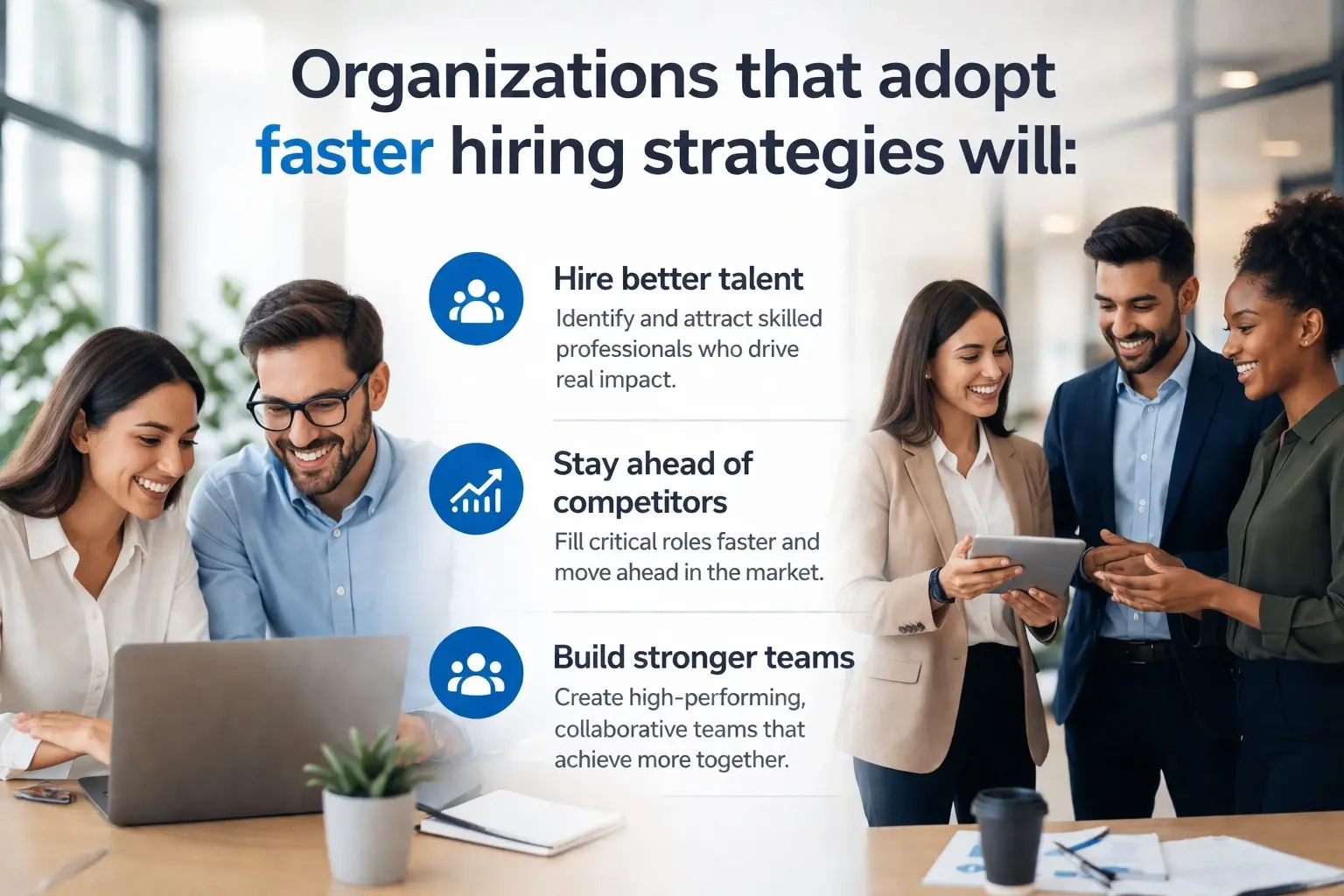
Organizations that embrace project-driven, skills-based evaluation models tend to hire faster, reduce mis-hires, and build stronger engineering teams in an increasingly competitive talent market.
Related Articles
Ready to transform your tech hiring?
Start evaluating candidates based on real-world capabilities, not just resumes.